2025 was the year QR codes stopped being a utility and became an experience. For over a decade, the humble black-and-white square lived in the background of commerce -- printed on receipts, stuck to conference badges, and occasionally slapped onto a restaurant table. Functional, forgettable, invisible.
Then 2025 happened. AI turned QR codes into artwork. Augmented reality turned them into portals. Livestream commerce turned them into cash registers. Healthcare turned them into patient advocates. And sustainability regulations turned them into accountability tools.
Looking back from early 2026, it's clear that the QR code trends of 2025 didn't just change how the technology was used -- they changed who cared about it. QR codes moved from the IT department to the design studio, from the marketing budget line to the C-suite strategy deck. The technology itself barely changed. Everything around it did.
This is the story of what happened, what stuck, what flopped, and what carried forward into the year we're living in now.
Key Takeaways
- AI-generated QR code art was the defining trend of 2025, boosting scan rates by 25-40% over standard black-and-white codes and becoming a baseline design expectation by year's end.
- Privacy-first analytics outperformed invasive tracking, delivering 2.9x better customer retention and 1.5x higher marketing ROI for companies using first-party data strategies.
- The EU Digital Product Passport regulation will generate more QR codes globally than any consumer marketing initiative, with mandatory requirements starting in 2027 for batteries and expanding through 2030.
- Healthcare QR adoption exceeded expectations, cutting patient check-in times from 15 minutes to under 3 minutes and expanding to prescription management and clinical trials.
- WebAR-via-QR became practical for product visualization, museum exhibits, and real estate, though Android fragmentation remains a limitation.
Want to try this yourself? The generator is free and opens straight away.
Create a QR codeTrend 1: AI-Generated QR Code Art
If one moment defined QR codes in 2025, it was the AI art explosion. What started as a curiosity in late 2023 -- Stable Diffusion ControlNet models bending QR patterns into visual art -- matured into a legitimate design discipline over the course of the year.
How it worked
The core technology relies on diffusion models that treat the QR code's data modules (the black and white squares) as constraints during image generation. The AI fills in the surrounding space with artwork while preserving enough of the underlying pattern for scanners to read the code. Early versions were fragile. By mid-2025, the reliability problem had been largely solved through better error correction handling and more sophisticated pattern-preservation techniques.
Tools like Quick QR Art, QR Code AI, and a wave of open-source projects on Hugging Face made the technology accessible to anyone with a browser. Platforms like QR-Verse now offer AI-powered QR code art generation directly in the browser with built-in quality gates. You no longer needed a GPU cluster or ML expertise. Upload a brand kit, describe a visual style, and get back a scannable piece of art in under 30 seconds.
Where brands took it
The applications went far beyond social media novelty:
- Consumer packaged goods -- Coffee brands embedded QR codes into illustrations of coffee plants on their packaging. Cosmetics companies wove codes into floral patterns on product boxes. The code wasn't an afterthought sticker anymore; it was part of the design language.
- Events and entertainment -- Festival organizers commissioned AI QR art for wristbands and posters, turning functional codes into collectible artwork. Concertgoers were photographing and sharing the codes themselves -- free marketing.
- Luxury and fashion -- High-end brands used AI QR to embed scannable codes into fabric patterns, product tags, and even storefronts without disrupting aesthetics. For luxury, where every visual element is curated, this was transformative.
The numbers that mattered
Branded and designed QR codes consistently showed 25-40% higher scan rates compared to standard black-and-white codes. The reason was simple: design communicates intent. A beautiful code that looks deliberate signals "this is worth scanning." A generic code signals "this is an afterthought."
By the end of 2025, enterprise brands were generating thousands of on-brand AI QR codes programmatically via API, not one at a time through web UIs. Design at scale became the competitive edge -- and the companies that figured this out earliest captured outsized engagement.
The AI QR art trend wasn't just a 2025 story. It's now the baseline expectation. If you're still putting plain black-and-white codes on consumer-facing materials in 2026, you're leaving scan engagement on the table. See our 2026 trends analysis for where this is headed next with real-time personalization and per-user code generation.
Trend 2: AR-Enabled QR Experiences
For years, "scan a QR code to launch an AR experience" was a demo that never survived contact with reality. The friction killed it every time: download this app, wait for it to load, point your camera, hope the tracking works. By 2025, WebAR had matured enough to remove most of that friction -- and the results started showing up in unexpected places.
What changed
The breakthrough wasn't a single technology but a convergence. WebXR APIs gained broader browser support. Frameworks like Google's Model Viewer made 3D content embeddable in standard web pages. Apple's ARKit integration with Safari tightened. And mobile processors got fast enough to run real-time 3D rendering without melting the phone.
The result: scan a QR code, and a 3D experience loads directly in your mobile browser. No app download. No App Store detour. Two seconds from scan to experience.
Where AR-via-QR landed in 2025
Retail Product Visualization
Furniture companies placed QR codes on showroom tags. Scan, and a 3D model of the sofa appears in your living room through your phone camera. IKEA had been doing this with their app for years, but QR-triggered WebAR made it possible for mid-market brands without the budget for a native app.
Museum and Gallery Interpretation
Museums added AR layers to exhibits. Scan a code next to a Roman artifact, and a reconstructed 3D model shows what it looked like before 2,000 years of wear. The Smithsonian and the British Museum ran pilot programs that saw engagement times triple compared to traditional text panels.
Real Estate Listings
Property agents placed QR codes on "For Sale" signs. Scan from the sidewalk, and an AR overlay shows the interior layout, room dimensions, and even virtual furniture staging -- all without entering the building.
Education and Textbooks
Textbook publishers embedded QR codes that launched 3D models of molecular structures, anatomical systems, and historical artifacts. For STEM education, the ability to rotate a 3D protein structure on your phone was genuinely more useful than a flat diagram.
The honest assessment
Most AR-via-QR experiences in 2025 were still gimmicky. Floating animated logos. Spinning brand mascots. Confetti effects. The experiences that actually worked were the ones where AR added information a flat webpage couldn't: a 3D product model you could rotate, a spatial overlay with real utility, an interactive demonstration.
The Android fragmentation problem also persisted. WebAR worked beautifully on iPhones, but performance varied wildly across Android manufacturers. Until that gap closes, AR-via-QR will continue to perform best in iOS-dominant markets.
Trend 3: Shoppable Video QR Codes
Livestream commerce was already a $500+ billion market in China by 2025. The question for Western markets was never "will this come here?" but "what bridge technology will make it work?" QR codes turned out to be that bridge.
The model
A host demonstrates a product on a live video stream -- Instagram Live, TikTok LIVE, YouTube, or a brand's own platform. At the moment of maximum interest, a QR code appears on screen. Viewers scan with their phones and land directly on a checkout page with the product pre-loaded, often with a time-limited discount tied to the stream.
The brilliance is in the timing. Traditional e-commerce asks you to remember a URL, navigate a site, find the product, and complete checkout. Shoppable QR codes compress that entire funnel into a single scan at the exact moment of peak purchase intent.
What the data showed
- Conversion rates for QR-triggered purchases from live streams ran 3-5x higher than standard link-in-bio approaches.
- Average order values were 15-25% higher during live QR events compared to standard e-commerce, driven by urgency and the "event" psychology.
- Return rates were lower -- when someone watches a live demonstration and then buys, they know exactly what they're getting.
Who adopted it
Beauty brands were the earliest and most aggressive adopters in Western markets. Sephora, Charlotte Tilbury, and a wave of D2C skincare brands ran regular live shopping events with QR-triggered checkout. Fashion followed. Electronics came next, with brands using live streams to demo features and trigger on-the-spot purchases. For a deeper look at how QR codes fit into the broader digital marketing playbook, including attribution and A/B testing, see our dedicated guide.
The most effective shoppable QR implementations used dynamic QR codes that could be updated in real-time during a stream. The host switches from Product A to Product B? The QR code on screen updates instantly to point to the new checkout page. No need to flash a new code.
The model also worked for recorded content. QR codes embedded in YouTube videos, podcast show notes pages, and even paused Netflix product placements turned passive viewing into active purchasing. The integration was rough in 2025 -- most implementations felt bolted on rather than native -- but the conversion data was strong enough to guarantee continued investment.
Trend 4: Privacy-First Analytics
If trends one through three were about making QR codes more exciting, trend four was about making them more responsible. The privacy reckoning that had been building since GDPR's early enforcement years hit QR code analytics platforms squarely in 2025.
The regulatory pressure
GDPR enforcement fines surpassed EUR 4.5 billion cumulatively by the end of 2025, with several high-profile penalties specifically targeting digital tracking practices. Third-party cookie deprecation timelines hardened. The California Privacy Rights Act (CPRA) entered full enforcement. Brazil's LGPD, India's DPDPA, and a cascade of new privacy laws worldwide created a compliance patchwork that made invasive tracking increasingly untenable.
For QR code platforms, this mattered directly. Traditional analytics collected everything: device fingerprints, precise GPS coordinates, cross-site browsing behavior, sometimes even app-level data on the scanning device. That level of tracking became legally risky and ethically indefensible. For a full overview of QR-related security risks and how to stay safe, read our QR code security and quishing guide.
What "privacy-first" actually meant
The platforms that adapted quickly moved to a new model:
Anonymized Session Tracking
Record scans, timestamps, and general location at the city level -- not street level, not building level. No tying scan data to identifiable individuals. No persistent device IDs.
Event-Based Analytics
Focus on what happened (scan, page view, conversion) rather than who did it. Aggregate behavioral patterns replace individual user journeys.
First-Party Data Only
No third-party cookie syncing. No cross-site tracking. No selling scan data to ad networks. The data stays between the QR code creator and the aggregated analytics dashboard.
Consent-Free Architecture
If your analytics don't use cookies or track individuals, you don't need a cookie consent banner. This isn't a loophole -- it's how privacy-respecting analytics should work in the first place.
Why it performed better
Here's the counterintuitive finding that surprised the industry: companies using first-party data strategies saw 2.9x better customer retention and 1.5x higher marketing ROI compared to those relying on third-party data. Privacy-first analytics didn't just protect users -- they produced better business outcomes.
The reason makes sense in hindsight. When you strip away the noise of cross-site tracking data and focus on what actually happens between a scan and a conversion, the signal-to-noise ratio improves dramatically. Fewer data points, but each one is higher quality and directly actionable.
For QR platforms, the competitive landscape shifted permanently. The ones that built privacy into their architecture from day one -- rather than retrofitting compliance onto surveillance systems -- gained a structural advantage that's only widening in 2026. Enterprise-grade QR solutions now treat privacy-first analytics as a core feature, not an add-on.
Privacy-First QR Codes, Zero Cost
QR-Verse gives you scan analytics, location data, and conversion tracking without invasive individual tracking. No cookies, no fingerprints, no compromise.
Create Your QR Code →Trend 5: QR Codes in Healthcare
Healthcare technology tends to move slowly. Regulations are strict, stakes are high, and institutional inertia is powerful. That makes what happened with QR codes in healthcare during 2025 all the more notable -- the adoption was fast, broad, and driven by both providers and patients.
Patient intake went digital
The pandemic had already pushed many clinics toward digital check-in, but the implementations were clunky: download our app, create an account, log in. QR codes stripped away the friction. A code displayed in the waiting room or sent via appointment reminder text opened a mobile-friendly intake form directly in the browser. No app, no account, no barrier.
Clinics that adopted QR-based intake reported check-in times dropping from 15 minutes to under 3 minutes. Front-desk staff were freed from data entry. Transcription errors from handwritten forms dropped to near zero.
Medication management found its medium
The U.S. Department of Veterans Affairs announced plans to roll out QR codes on prescription bottles, replacing multi-page medication information sheets. A single scan provides dosage instructions, side effect information, drug interaction warnings, and refill links -- all in the patient's preferred language, formatted for mobile.
The critical design principle: the QR code never contains personal health information. It links to generic drug information or to an authenticated system that verifies identity before displaying patient-specific data. This distinction matters enormously for HIPAA compliance.
Beyond intake and prescriptions
Clinical Trials
QR codes on consent forms and study materials link to the latest protocol version, ensuring participants always have access to current information -- a regulatory requirement that paper-based systems struggle to meet.
Drug Authentication
Pharmaceutical companies embedded QR codes in packaging to verify authenticity and combat counterfeiting -- critical in markets where counterfeit drugs pose serious public health risks.
Wayfinding
Large hospital campuses used QR-based indoor navigation. Scan a code in the parking garage, get turn-by-turn directions to your department. No app download, works on any phone.
For a deeper look at healthcare applications, see our complete QR Codes in Healthcare guide, which covers twelve specific use cases from patient intake to emergency medical information.
Trend 6: Sustainability QR -- Product Lifecycle and Carbon Tracking
The sustainability conversation around QR codes used to be superficial: "we saved X trees by going paperless." In 2025, regulation and consumer demand pushed it into genuinely meaningful territory.
The EU Digital Product Passport
The single biggest development was the EU's Ecodesign for Sustainable Products Regulation (ESPR), which mandates Digital Product Passports (DPPs) -- machine-readable records of a product's sustainability data, accessible via QR code, NFC, or RFID. The regulation was adopted in 2024, and implementation timelines began taking shape in 2025:
- Battery and energy storage products are first in line, with mandatory DPP requirements starting in 2027.
- Textiles, electronics, furniture, and additional categories follow through 2030.
- A central EU digital registry for DPP data was slated for establishment by mid-2026.
Every product sold in the EU will eventually carry a scannable code linking to its environmental footprint, materials composition, repairability score, and recycling instructions. QR codes are the most probable carrier for consumer-facing access given their zero cost and universal compatibility.
Supply chain transparency got real
Beyond regulation, brands began using QR codes voluntarily to differentiate on sustainability:
- Fashion -- Scan a garment tag to see where the cotton was grown, where it was dyed, the carbon footprint of each manufacturing step, and the factory's labor certification status.
- Food and beverage -- QR codes on packaging linked to complete supply chain maps showing farm origin, processing facilities, transport routes, and calculated carbon emissions per unit.
- Electronics -- Codes on devices linked to disassembly guides, spare parts ordering, and recycling center locators -- foundational infrastructure for the circular economy.
Dynamic QR codes as waste reduction
The environmental math for dynamic QR codes is compelling. Every time a brand updates product information, regulatory disclosures, or promotional materials, traditional practice requires new print runs and old stock disposal. Dynamic codes break the cycle: the printed code stays fixed, the content behind it evolves.
Restaurants that switched from printed menus to QR code menus reported up to 80% reduction in annual paper usage. For brands with frequently changing regulatory information -- food, pharmaceuticals, cosmetics -- dynamic codes eliminate the need to destroy and reprint inventory after every compliance update.
The shift from voluntary greenwashing to mandated, auditable sustainability data is the most significant QR code story of 2025 from a long-term impact perspective. It's quiet, regulatory, and unsexy -- but it will affect more QR codes globally than any other trend on this list.
What Didn't Pan Out
Not every prediction for 2025 aged well. A few things that were heavily hyped but failed to materialize in any meaningful way:
The metaverse prediction
Multiple reports in 2024 predicted that QR codes would become navigation tools inside virtual worlds -- scan a code in VR to teleport to a virtual store. This required "the metaverse" to mean something concrete, which it never did. Meta scaled back its metaverse investments. Apple Vision Pro launched as a spatial computing device, not a metaverse gateway. The entire premise evaporated.
Blockchain QR verification
The pitch was appealing: use blockchain to create tamper-proof, verifiable QR codes. The reality was that signed URLs with certificate-based verification accomplish the same thing without the overhead, energy cost, or complexity of a blockchain layer. Some supply chain pilots using blockchain-backed QR codes launched in 2025, but consumer-facing adoption was effectively zero.
The "QR 2.0" formats
Every few months, a startup announced a next-generation visual code that stored more data or looked cooler than standard QR. These invariably required a proprietary scanner app, which destroys the fundamental value proposition. The reason QR codes dominate is that every smartphone camera on earth already reads them. That installed base is unbeatable, and no amount of technical superiority in a competing format can overcome the distribution advantage.
What Carried Into 2026
The QR code trends of 2025 didn't reset when the calendar turned. The most durable ones are now foundational to how the technology is being used and built upon in 2026:
AI QR design has graduated from trend to expectation. The conversation in 2026 isn't "should we use AI-designed codes?" but "how do we generate them at scale across our entire product catalog?" API-first AI QR generation, real-time personalization, and per-user code design are the current frontier. Read more in our QR Code Trends 2026 deep dive.
Privacy-first analytics became the default. The platforms that were ahead of the curve in 2025 now have structural competitive advantages. The ones that were late are scrambling to retrofit privacy -- an expensive, fragile process. Regulation continues to tighten globally, making this a one-way door.
Healthcare QR adoption is accelerating. The VA's prescription QR initiative is rolling toward full implementation in 2026. Clinics that digitized intake in 2025 are expanding to appointment scheduling, wayfinding, and patient education. The infrastructure built during the pandemic era finally has mature, privacy-compliant applications running on top of it.
The EU Digital Product Passport is the multi-year trend to watch. The regulatory timelines are set. The technical requirements are being finalized. Every brand selling into the EU market is now planning their DPP implementation, and QR codes are the default carrier for consumer-facing access. This will generate more QR codes than any consumer marketing initiative in history.
Shoppable QR codes are merging with broader social commerce infrastructure. The rough, bolted-on implementations of 2025 are being replaced by native platform integrations. TikTok Shop, Instagram Checkout, and YouTube Shopping are all building QR-triggered purchase flows directly into their live shopping features.
What didn't carry forward is equally telling. The hype around metaverse QR codes, blockchain verification, and proprietary code formats has largely dissipated. The market has spoken: practical, standards-based, privacy-respecting applications win. Novelty for its own sake doesn't.
Ready to Build on These Trends?
Create free, dynamic QR codes with built-in analytics. No sign-up required. Start with a URL, WiFi, vCard, or any of our 15+ code types.
Start Creating →Frequently Asked Questions
What was the biggest QR code trend of 2025?
AI-generated QR code art had the most visible impact. Tools using Stable Diffusion and similar models transformed QR codes from generic squares into branded design elements. Branded AI codes showed 25-40% higher scan rates, making design a measurable performance variable for the first time. But from a long-term impact perspective, the EU Digital Product Passport regulation may ultimately generate more QR codes than any other single development.
Are AI-generated QR codes reliable enough for business use?
Yes, as of mid-2025. Early AI QR art had scan reliability issues -- incorrect angles or poor lighting caused failures. The current generation of tools maintains scan reliability above 95% through improved error correction handling and smarter pattern preservation during image generation. Enterprise brands are now generating thousands of AI QR codes programmatically via API for product catalogs and marketing materials.
How did privacy regulations affect QR code analytics in 2025?
Significantly. GDPR enforcement, CPRA in California, and new privacy laws worldwide pushed QR analytics platforms away from invasive tracking (device fingerprints, precise geolocation, cross-site behavior) toward anonymized, aggregate analytics. The surprising finding was that privacy-first approaches produced better business outcomes: 2.9x better customer retention and 1.5x higher marketing ROI compared to third-party data strategies.
Did QR code payments take off in the West in 2025?
Partially. Europe made significant progress with the launch of Wero (the European Payments Initiative), which supports QR-based payments natively and was live in Germany, France, and Belgium by early 2025. However, QR payments in the West remain far behind Asia, where China's Alipay and India's UPI process billions of QR transactions monthly. Western adoption is growing but still fragmented across platforms and regions.
What QR code trends from 2025 should I pay attention to in 2026?
Four trends have proven durable: AI QR design (now an industry baseline), privacy-first analytics (now a regulatory necessity), healthcare QR adoption (expanding from intake to full patient journey), and the EU Digital Product Passport (mandatory sustainability QR codes rolling out through 2030). Read our full QR Code Trends 2026 analysis for what's coming next.
Should I use static or dynamic QR codes for my business?
Dynamic QR codes are almost always the better choice. They let you change the destination URL without reprinting the code, track scan analytics, and run A/B tests. Static codes are simpler but permanent -- once printed, the destination can never change. For a detailed comparison, see our Static vs Dynamic QR Codes guide. You can create both types for free with our free QR code generator.
Ready to create your QR code?
Free plan available. No signup required. Create professional QR codes in seconds.
Ready to try it yourself?
Create professional QR codes with tracking, custom colors, and AI-generated art.
Try our free tools:
Create your QR code in seconds
No signup, no credit card. 27 QR types with full customization. Upgrade to Pro (€4.99/mo) for unlimited power.
Share this article
Related Articles

QR Code Trends 2026: 5 Shifts in Design, AI & Data
The 5 QR code shifts shaping 2026: AI art design trends, GS1 Digital Link, privacy-first analytics and more - with data and real product examples.
Read More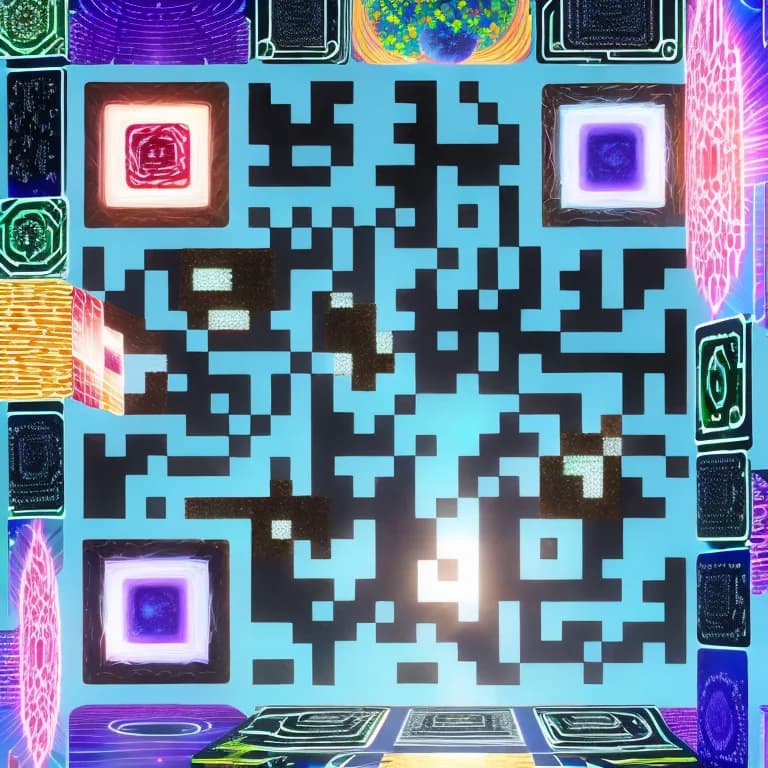
AI QR Code Art Generator: Turn Boring Codes into Art
Transform standard QR codes into scannable artworks with AI. 157 style presets, custom prompts, and ControlNet technology - free guide with tips.
Read More
50+ QR Code Statistics for 2026: Usage, Trends & Market Data
65+ verified QR code statistics for 2026: $15.3B market size, 100M+ US scanners, $5T+ in QR payments, industry adoption rates, quishing trends, and growth projections through 2030. Updated April 2026.
Read More