Every year, someone declares QR codes "back." But here's the thing - they never left. What's actually changing in 2026 isn't adoption (that ship sailed during the pandemic). It's how the technology is being used, who's building on top of it, and what the regulatory landscape is doing to shape the next wave.
This isn't a listicle of vague predictions. These are the trends we're tracking based on real product launches, policy shifts, and market data. Some are already here. Others are six months out. All of them matter if you're building anything that touches the physical-digital bridge.
Key Takeaways
- AI QR code design has graduated from novelty to industry standard in 2026, with branded codes showing 25-40% higher scan rates and API-first generation enabling production at scale across entire product catalogs.
- Europe's Wero payment system is bringing QR-based payments to the continent, with 40 million enrolled users and NFC point-of-sale payments going live in 2026.
- Privacy-first analytics is now the default for QR platforms, driven by EUR 6.7 billion in GDPR fines - companies using first-party data see 2.9x better retention and 1.5x higher marketing ROI.
- The EU Digital Product Passport will require every product sold in the EU to carry a scannable code linking to sustainability data, with mandatory timelines starting 2027.
- QR code security (quishing prevention) is the critical challenge as adoption grows - branded codes, URL previews, and dynamic code rotation are the primary defenses.
Want to try this yourself? The generator is free and opens straight away.
Create a QR codeAI-Powered QR Codes: From Novelty to Design Standard
Remember when AI-generated QR codes first hit social media in 2023? A Stable Diffusion ControlNet model turned a scannable code into a piece of art, and the internet lost its mind. Two years later, the novelty has worn off - but the underlying capability has matured into something genuinely useful.
The current generation of AI QR tools (Quick QR Art, QR Code AI, and a growing list of API-first startups) can now reliably generate branded, visually coherent QR codes that maintain scan reliability above 95%. That's the key word: reliably. Early AI QR art was fragile. Scan it from the wrong angle or in low light, and it fell apart. The 2026 models have solved this through better error correction handling and smarter pattern preservation during the diffusion process.
What's actually happening on the ground
- CPG brands are embedding AI-generated QR codes directly into packaging design, not as an afterthought sticker but as an integrated visual element. Think: a coffee brand where the QR code is woven into the illustration of a coffee plant.
- Event organizers are commissioning custom AI QR art for festival wristbands and concert posters, turning the code itself into collectible artwork.
- Luxury fashion is using AI QR to embed scannable codes into fabric patterns and product tags without disrupting brand aesthetics.
The data backs this up: branded and designed QR codes see scan rate increases of 25-40% over standard black-and-white codes. Design is no longer decoration - it's a performance variable. When a code looks intentional and on-brand, people trust it more, and trust drives scans.
What to watch for
The next frontier is real-time personalization - AI systems that generate unique QR designs per user or per context, while keeping the underlying destination consistent. A few enterprise platforms are already testing this for direct mail campaigns.
QR-Verse's AI QR code art generator is one example of this shift, offering 130+ style presets with a built-in quality gate that verifies scannability before delivery. There's also a growing API ecosystem around AI QR generation. Instead of using a web UI to generate one code at a time, brands are integrating AI QR endpoints directly into their design pipelines. Upload a brand kit, specify a style, and get back hundreds of on-brand codes programmatically. This is where the real scale is - not in one-off art pieces, but in systematic, brand-consistent code generation across entire product lines.
The tools are also getting faster. What used to take 30-60 seconds per generation on a GPU cluster is now sub-10 seconds on optimized inference pipelines. That matters when you're generating codes for a catalog with 5,000 SKUs.
QR Codes Meet Augmented Reality (and It Actually Works Now)
For years, "scan a QR code to launch an AR experience" was a tech demo staple that never translated to the real world. The friction was too high: download this app, wait for it to load, point your camera here, hope it tracks properly.
That's changing, and WebAR is the reason.
Web-based augmented reality - powered by WebXR APIs and frameworks like Model Viewer - lets you deliver AR experiences directly in a mobile browser. No app download. No App Store. Scan a QR code, and the 3D experience loads in Safari or Chrome within seconds.
Where this is landing in 2026
- Museums and galleries are adding AR interpretation layers to exhibits. Scan a code next to a painting, and a 3D reconstruction of the artist's studio appears on your screen.
- Product packaging is becoming interactive. Scan a cereal box to see a mini-game. Scan a wine bottle to watch a virtual vineyard tour. These aren't hypothetical - brands like 19 Crimes have been doing this for years, but now the tech is cheap enough for mid-market brands.
- Real estate is using QR-triggered AR for property listings. Scan a "For Sale" sign and see the interior layout overlaid on the building facade.
- Education is a sleeper hit. Textbook publishers are embedding QR codes that launch 3D models of molecules, historical artifacts, and anatomical structures.
One notable shift: 8th Wall, which was the leading commercial WebAR platform, shut down in 2026. The ecosystem is fragmenting into open-source alternatives and smaller specialized players like Kivicube and Zubr. This is actually good news for adoption - it means the technology is commoditizing.
The honest take
Most AR-via-QR experiences are still gimmicky. The ones that work are the ones where AR genuinely adds information that a flat webpage can't. A 3D model of a product you're considering buying? Useful. A floating animated logo? Not useful. The companies that understand this distinction will win. Explore the full range of QR code types and tools to see which formats support AR-ready destinations.
The technical barrier is also worth noting. WebAR still struggles with occlusion (making virtual objects appear behind real ones), persistent anchoring (keeping a 3D object fixed in space as you move around), and performance on mid-range Android devices. Apple's ARKit integration with Safari is solid, but the Android side remains inconsistent across manufacturers. Until that gap closes, WebAR via QR will remain strongest on iOS - which is a problem if your audience skews toward Android-dominant markets.
Universal Payment Adoption: Europe Finally Gets Serious
If you've traveled in Asia, you know the drill: QR codes are the default payment method. China's ecosystem runs on Alipay and WeChat Pay. India's UPI processes billions of QR-based transactions monthly. Southeast Asia is close behind.
Europe has been the notable holdout. That's about to change.
Wero: Europe's answer to fragmented payments
The European Payments Initiative (EPI) launched Wero in July 2024, and it's now live in Germany, France, and Belgium with 40 million enrolled users as of early 2025. Luxembourg and the Netherlands are next. The timeline is aggressive:
- Late 2025: Online retail payments launch in Germany
- 2026: Online payments expand to Belgium and France
- 2026: NFC-enabled point-of-sale payments go live
- Second half of 2026: N26 integrates Wero for customers in Germany, France, and the Netherlands
Wero supports QR code-based payments natively, and here's the privacy angle that matters - users can generate individual QR codes to make payments without disclosing their phone number. That's a meaningful improvement over peer-to-peer apps that require sharing personal contact info.
The bigger picture
Wero isn't just another payment app. It's an attempt to build a pan-European payment rail that can compete with Visa, Mastercard, and the American tech giants. Backed by 16 major European banks, including BNP Paribas and Societe Generale, it has the institutional weight to actually work. Whether it will is another question - but the QR code infrastructure is being built regardless.
Revolut joined EPI in June 2025, which is a strong signal that the fintech ecosystem sees this as a real play, not just a bureaucratic exercise.
For context on the scale of what Europe is catching up to: India's UPI processed over 14 billion transactions in a single month in late 2025. China's Alipay and WeChat Pay handle a combined daily volume that dwarfs most European payment networks. The gap is enormous, but Wero has one advantage those systems didn't: it's launching into a market where smartphone penetration is already near-universal and consumer trust in banking institutions is high. The adoption curve could be steep once merchant integration hits critical mass.
QR Codes vs. NFC: Not a Replacement - a Convergence
The "QR vs. NFC" debate has been going on for a decade, and the 2026 answer is clear: it's not either/or. The two technologies are merging.
Alipay Tap: The hybrid model
The most significant data point here is Alipay's Tap! feature, which launched in July 2024 and hit 100 million daily payment transactions by January 2026. Tap! combines QR and NFC into a single interaction: unlock your phone, tap it against a terminal, done. No app launch. No camera. No scanning.
Over 200 million consumers in China have used it. It's especially popular with two demographics you wouldn't expect - older adults and people with visual impairments - because it eliminates the need to point a camera and frame a code.
What this means for retail
The framing of "QR codes replacing NFC" was always wrong. Here's the real dynamic:
- QR codes win where hardware investment is zero. A street vendor, a farmer's market stall, a pop-up shop - anywhere you can print a code and accept payments without buying a terminal.
- NFC wins where speed matters. High-throughput retail checkout, transit gates, quick-service restaurants.
- The hybrid wins everywhere else. And "everywhere else" is most of commerce.
QR code payments are projected to hit $2.2 trillion globally in 2025. NFC isn't going anywhere either. The smart money is on platforms that support both seamlessly.
What's interesting about the Alipay Tap model is that it also extends beyond payments. The same tap gesture connects users to over 2,200 everyday services - restaurant ordering, shared bike unlocking, parcel collection, even instant tax refunds. The QR/NFC hybrid isn't just a payment interface; it's becoming an all-purpose physical-to-digital interaction layer. Western payment platforms would be wise to study this playbook carefully.
Privacy-First Analytics: The End of Creepy Tracking
Here's a trend driven by regulation, not innovation - and it's reshaping how QR code analytics work.
GDPR enforcement hit a cumulative total of over EUR 6.7 billion in fines by December 2025, with 2,679 penalties issued. That's not a number companies can ignore. Combined with the broader shift toward cookieless tracking and the deprecation of third-party cookies, the QR code analytics space is being forced to grow up.
What "privacy-first" actually means for QR codes
Traditional QR code analytics platforms tracked everything: device fingerprints, precise geolocation, cross-site behavior. The new standard looks different:
- Anonymized session tracking - record scans, timestamps, and general location (city-level, not street-level) without tying data to identifiable individuals.
- Event-based analytics - focus on what users do (scanned, visited landing page, converted) rather than who they are.
- First-party data only - no third-party cookie syncing, no cross-site tracking, no selling scan data to ad networks.
- Consent-first collection - scan analytics should work without requiring cookie consent banners, because they shouldn't be using cookies in the first place.
Why this matters commercially
Companies using first-party data strategies are seeing 2.9x better customer retention and 1.5x higher marketing ROI compared to those relying on third-party data. Privacy-first isn't just ethically correct - it performs better.
For enterprise QR code deployments, this means the value proposition is shifting. The question isn't "how much data can we collect per scan?" It's "how much actionable insight can we deliver while respecting the person holding the phone?"
The practical shift for QR platforms
Expect to see QR analytics dashboards that emphasize aggregate patterns over individual tracking. Heatmaps of scan activity by region. Time-of-day distribution curves. Conversion funnels from scan to action. Device and OS breakdowns. All of this is possible without ever identifying a specific person.
The platforms that figured this out early - those built with privacy as an architectural decision, not a compliance checkbox - are going to have a significant competitive advantage. Retrofitting privacy into a system designed for surveillance is expensive and brittle. Building it in from day one is cheaper and more reliable. This is one of those rare cases where doing the right thing and doing the smart thing are the same thing.
Cross-Platform Deep Linking Gets Smarter
QR codes have always been a bridge between physical and digital. But the "digital" side of that bridge has been messy. Scan a QR code on your phone and you might end up in a browser when you wanted the app, or vice versa. Deep linking is supposed to solve this, and in 2026, it's finally getting good enough to be invisible.
The current state of play
- iOS Universal Links and Android App Links are mature and well-supported. Scan a QR code, and the OS can route you directly to the right screen in the right app - if the developer set things up correctly.
- App Clips (iOS) and Instant Apps (Android) let users experience a lightweight version of an app without a full download. A QR code on a parking meter can launch a 10MB payment clip instantly.
- Firebase Dynamic Links officially shut down in August 2025, forcing thousands of apps to migrate to alternatives like Branch, Kochava, or custom solutions. This was painful but ultimately healthy - it pushed the ecosystem toward more resilient, self-hosted link infrastructure.
What's new
The interesting development is the convergence of deep linking with contextual awareness. A QR code scanned at a specific store location can deep-link to that store's page in the app, pre-populated with local inventory and offers. A QR code on a product can deep-link to the warranty registration page with the serial number pre-filled.
Voice assistants are also entering the picture - deep links triggered by voice commands that reference a previously scanned QR code. "Hey Siri, reorder what I scanned at the store" is becoming technically feasible, even if adoption is still early.
The Firebase fallout
The deprecation of Firebase Dynamic Links deserves more attention than it's getting. Google gave developers about a year of notice, but many apps - particularly smaller ones without dedicated infrastructure teams - were caught flat-footed. The migration path wasn't always clean: Branch and AppsFlyer have different attribution models, different SDKs, and different pricing structures.
The silver lining is that the post-Firebase world is pushing developers toward owning their link infrastructure. Self-hosted redirect services with proper Universal Link and App Link configurations are more resilient than depending on a third-party service that can be deprecated with a blog post. If your QR codes point to a link service you don't control, you're one sunset announcement away from broken codes on every printed surface in the world.
Healthcare and Government: The Quiet Revolution
This is the trend that gets the least attention and arguably matters the most.
Healthcare
The U.S. Department of Veterans Affairs is rolling out QR codes on prescription bottles to replace traditional multi-page medication information sheets. The full implementation is expected by May 2026. Patients scan the code to access drug information - dosage, side effects, interactions - without any personal health data embedded in the code itself.
Beyond prescriptions, healthcare is using QR codes for:
- Patient identification - QR-coded wristbands and badges that give clinicians instant access to medical history, from admission to discharge.
- Drug authentication - QR codes on pharmaceutical packaging to verify authenticity and combat counterfeiting. This is particularly critical in markets with significant counterfeit drug problems.
- Appointment check-in - scan a code in the lobby to check in, complete pre-visit forms, and confirm insurance digitally.
- Clinical trials - QR codes on consent forms and study materials that link to up-to-date protocol information, ensuring participants always have access to the latest version.
The key design principle across all of these: the QR code should never contain personal health information directly. It should always point to a secure, authenticated system. The VA's prescription implementation gets this right - the code links to generic drug information, not to the patient's medical record. That distinction matters enormously for compliance with HIPAA and equivalent regulations worldwide.
Government services
The pandemic-era digital vaccine certificates proved that governments could deploy QR-based systems at scale. That infrastructure is now being repurposed:
- Digital identity verification - several EU member states are piloting QR-based identity documents that can be verified offline.
- Public transit - QR-based ticketing is expanding beyond major metros into regional and rural transit systems.
- Tax and benefits - QR codes on government correspondence that link directly to online filing or benefits portals.
The EU Digital Product Passport
This is the regulation to watch. The EU's Ecodesign for Sustainable Products Regulation (ESPR) requires Digital Product Passports (DPPs) - machine-readable records of a product's sustainability data, accessible via QR code, NFC, or RFID.
The timeline: by July 2026, the EU will establish a central digital registry for DPP data. Mandatory requirements begin rolling in for batteries and energy storage in 2027, followed by textiles, electronics, furniture, and more through 2030.
Every product sold in the EU will eventually need a scannable code that links to its environmental footprint, materials composition, repairability score, and recycling instructions. QR codes are the most likely carrier for consumer-facing access, given their zero-cost and universal compatibility.
Sustainability: Dynamic QR Codes as a Waste Reduction Tool
Speaking of sustainability - the environmental case for QR codes keeps getting stronger, and it's more concrete than "save paper."
The dynamic QR advantage
Every time a brand updates packaging, instruction manuals, or promotional materials, new print runs are produced, shipped, and old stock is discarded. Dynamic QR codes break this cycle. The printed code stays the same; the content behind it evolves. Change your return policy? Update the URL. Launch a new product line? Redirect the code. No reprinting. No waste.
Real numbers
- Restaurants that switched from paper menus to QR code menus report up to 80% reduction in paper usage annually.
- Dynamic QR codes on product packaging eliminate the need to destroy and reprint inventory when regulatory information changes - a common occurrence in food, pharmaceuticals, and cosmetics.
- Paperless billing via QR codes on invoices and statements is reducing paper consumption across banking, utilities, and telecoms.
The bigger sustainability play
The EU Digital Product Passport (mentioned above) is the most ambitious sustainability-meets-QR initiative we've seen. But there are smaller, equally meaningful applications:
- Supply chain transparency - scan a code on a garment to see where the cotton was grown, where it was dyed, and the carbon footprint of each step.
- Circular economy - QR codes on electronics that link to disassembly guides, spare parts ordering, and recycling center locators.
- Carbon labeling - QR codes that link to detailed lifecycle assessments, going beyond the simplified labels that fit on a physical package.
- Food waste reduction - dynamic QR codes on perishable goods that update with real-time freshness data, discount pricing as expiration approaches, and recipe suggestions for items nearing end-of-life.
The sustainability narrative around QR codes used to feel like greenwashing. "We saved X trees by going digital" was a claim everyone made and nobody verified. What's different now is that the EU's regulatory framework is forcing accountability. When your product passport is legally required to contain verifiable environmental data, the sustainability claims become auditable. That's a meaningful shift from voluntary feel-good metrics to mandated transparency.
Security: The Elephant in the Room
No honest trends piece can skip this. As QR codes become more ubiquitous, so do QR-based phishing attacks - sometimes called "quishing."
The attack is simple: place a fraudulent QR code sticker over a legitimate one (on a parking meter, a restaurant table, a public transit poster), and redirect victims to a credential-harvesting page. Reports of quishing attacks increased significantly throughout 2025, particularly in urban areas with high QR density.
What's being done
- Visual verification layers - some platforms now embed brand logos and verified indicators within the QR design itself, making it harder to spoof with a plain sticker.
- URL preview standards - both iOS and Android now show a URL preview before opening a scanned link. Users should be trained to actually read it.
- Dynamic code rotation - for high-security applications, some systems rotate the QR code content every few minutes, making sticker-based attacks impossible since the destination changes.
- Tamper-evident printing - physical QR codes printed with materials that show visible damage if a sticker is placed over them.
The uncomfortable truth is that QR code security is ultimately a user education problem. The technology can add layers of protection, but a determined attacker with a sheet of stickers and a phishing page will always find a way if the end user doesn't check the URL. Every platform pushing QR adoption has a responsibility to push security awareness alongside it.
What We're Not Buying
Not every QR trend deserves the hype. A few things we're skeptical about:
- QR codes in the metaverse - until "the metaverse" means something specific, QR codes in virtual worlds are a solution looking for a problem.
- Blockchain-verified QR codes - the verification problem is real, but bolting a blockchain onto a QR code adds complexity without clear consumer benefit. Signed URLs with certificate-based verification work fine.
- QR codes replacing all physical documents - governments move slowly, and paper isn't going anywhere for official documents in most countries. The realistic path is QR codes augmenting physical documents, not replacing them.
- "QR code 2.0" proprietary formats - every few months a startup announces a next-generation visual code that holds more data or looks cooler than standard QR. These invariably fail because they require a custom scanner app, which defeats the entire point. The strength of QR codes is that every smartphone camera on earth already reads them. That installed base is unbeatable.
The Bottom Line
QR codes in 2026 are infrastructure. They're not exciting in the way that a new social network or AI model is exciting. They're exciting in the way that electricity is exciting - ubiquitous, essential, and evolving in ways that most people don't notice until something breaks.
The trends worth paying attention to are the ones driven by real forces: EU regulation mandating Digital Product Passports, GDPR enforcement pushing analytics toward privacy-first models, Wero bringing QR payments to European commerce, and AI making code design a competitive advantage rather than an afterthought.
If you're building products or running campaigns that involve QR codes, the playbook for 2026 is straightforward:
- Invest in design - AI tools make branded, high-converting codes cheap to produce at scale. There's no excuse for plain black-and-white codes on consumer-facing materials anymore.
- Respect user privacy - the law requires it, the data supports it, and users increasingly expect it. Build analytics around aggregate insights, not individual surveillance.
- Use dynamic codes - so you never have to reprint anything. The flexibility to change destinations, run A/B tests, and update content without touching the physical code is table stakes.
- Own your link infrastructure - don't depend on third-party redirect services that can be deprecated or acquired. If your QR codes outlast the service behind them, you have a problem.
- Think end-to-end - from the physical placement to the scan experience to the landing page to the analytics dashboard. Every step is a potential drop-off point.
The boring stuff is what works. And in 2026, QR codes are doing a lot of boring, important work.
Stay Ahead of QR Code Trends in 2026
Create AI-powered, branded QR codes with built-in analytics and privacy-first tracking. Free to start - no account required.
Get Started Free →Frequently Asked Questions
What are the biggest QR code trends in 2026?
The five major trends are: AI-powered QR code design becoming an industry standard, European QR payments via Wero reaching critical mass, privacy-first analytics replacing invasive tracking, the EU Digital Product Passport creating mandatory QR requirements, and cross-platform deep linking getting smarter after Firebase Dynamic Links shut down. The common thread is maturation - QR codes in 2026 are infrastructure, not novelty.
How do AI QR codes work and are they reliable?
AI QR codes use diffusion models (typically ControlNet) to blend artistic styles with QR code patterns while preserving scannability. The 2026 generation reliably maintains scan rates above 95% through better error correction handling and pattern preservation. Platforms like QR-Verse achieve 98.9% scan reliability using multi-stage quality gates. For details on how error correction enables this, see our error correction guide.
Will QR code payments replace cards in Europe?
Not replace, but complement. Europe's Wero system supports QR-based payments natively and is live in Germany, France, and Belgium with 40 million users. NFC point-of-sale payments launch in 2026. The likely outcome is a hybrid model similar to Asia's Alipay Tap - combining QR and NFC for different contexts. QR codes dominate where zero hardware investment is needed (street vendors, pop-ups); NFC wins where speed matters (high-throughput retail).
What is the EU Digital Product Passport and how does it use QR codes?
The EU's Ecodesign for Sustainable Products Regulation (ESPR) requires Digital Product Passports - machine-readable records of a product's environmental footprint, materials, repairability, and recycling instructions. QR codes are the most likely consumer-facing carrier given their zero cost and universal compatibility. Mandatory requirements begin for batteries in 2027, expanding to textiles, electronics, and furniture through 2030. See our complete DPP guide for implementation details.
How can businesses protect against QR code phishing (quishing)?
Use branded, dynamic QR codes that are visually recognizable and harder to counterfeit. Always provide context around codes ("Scan to view our menu - powered by [Brand]"). Conduct regular physical audits of deployed codes to check for sticker overlays. Monitor scan analytics for anomalous patterns. For enterprise deployments, develop a formal QR code security policy covering generation standards, audit procedures, and incident response. Our QR code security guide covers this in depth.
Ready to create your QR code?
Free plan available. No signup required. Create professional QR codes in seconds.
Ready to try it yourself?
Create professional QR codes with tracking, custom colors, and AI-generated art.
Try our free tools:
Create your QR code in seconds
No signup, no credit card. 27 QR types with full customization. Upgrade to Pro (EUR 4.99/mo) for unlimited power.
Share this article
Related Articles

QR Code Trends 2025: AI, AR, and What Comes Next
AI-generated art codes, AR gateways, shoppable streaming, and privacy-first analytics. Explore the trends defining the next era of QR technology.
Read More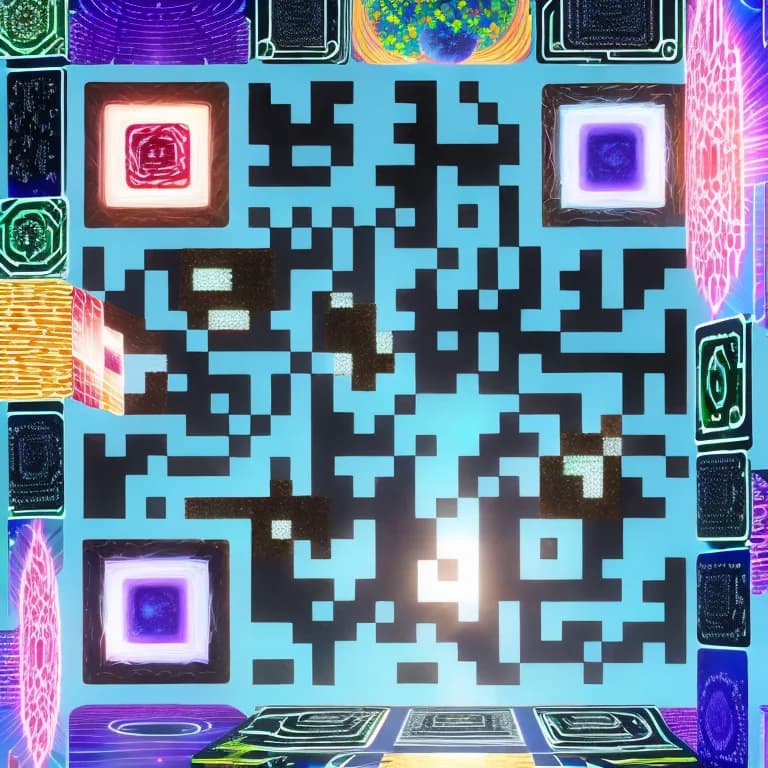
AI QR Code Art Generator: Turn Boring Codes into Art
Transform standard QR codes into scannable artworks with AI. 157 style presets, custom prompts, and ControlNet technology - free guide with tips.
Read More
50+ QR Code Statistics for 2026: Usage, Trends & Market Data
65+ verified QR code statistics for 2026: $15.3B market size, 100M+ US scanners, $5T+ in QR payments, industry adoption rates, quishing trends, and growth projections through 2030. Updated April 2026.
Read More