Most "Linktree alternative" guides are written by a social media scheduling tool, a review aggregator, or a generic blog rather than by a QR code platform. That matters because the comparison they make - tool A vs tool B vs tool C, all online-only - misses the biggest gap in the bio link market: what happens when your audience is not looking at a screen.
This guide compares 9 tools across pricing, commission structure, QR code support, analytics, custom domain, and offline use. We cover each tool honestly, including where competitors outperform QR-Verse. The goal is to help you find the right fit - not to sell you on ours.
Key Takeaways
- Linktree's free plan charges a 12% commission on digital products and courses sold through its built-in Commerce features. It is a revenue share rather than a subscription cost, which is a different kind of line in a budget.
- Beacons is the strongest all-in-one creator monetization platform if you want brand deals, email automation, and a storefront from one dashboard.
- Stan Store is the best pure-play digital product storefront but costs $29/month minimum with no free plan.
- Carrd is the most affordable paid option ($9-$49/year) for simple one-page sites, but lacks dynamic link editing and analytics.
- Lnk.Bio offers a lifetime plan at $9.99 - the lowest total cost of ownership for basic link pages.
- QR-Verse is built around the QR code rather than adding one to a link page, which is why each code carries its own editable destination and its own scan data. It is the right choice when your audience includes people not already on social media.
- Later Linkin.bio, Shorby, and Campsite.bio are solid options with distinct strengths covered below.
Moving your links across? Start in the generator with a multi-link code: every link behind one QR.
Start with multi-linkWhy Look for a Linktree Alternative?
Most people search "linktree alternative" for one of five reasons.
The commission. Linktree publishes a commission ladder for digital products and courses sold directly through its built-in Commerce features: 12% on the free plan, 9% on Starter and Pro, 0% on Premium. That is not a subscription cost, it is a revenue share, and it applies to those Commerce sales rather than to every sale you might make - linking out to your own shop is not charged. For full details, see our Linktree pricing teardown.
What its QR code can and cannot do. Linktree does give you a downloadable QR code for your page, so this is not a question of having one. The code resolves to your Linktree page, and one profile means one code, so a table tent and a poster cannot be told apart in the data unless you run a separate profile for each. Repointing works at the profile level: a Redirect can send a whole Linktree somewhere else for a period, but not one printed placement while leaving the others alone. The nonprofit version of this comparison goes through it row by row with sources in our nonprofits guide.
Offline reach is not the default. Social media bio links assume your audience is already on Instagram, TikTok, or Twitter. That covers a lot of people, but not a customer reading your menu, a fan at a merch table, or a donor at a charity event. Most tools in this comparison are built for digital audiences first, with print as an afterthought if it appears at all.
Where the data is processed. Linktree's privacy notice describes processing in Australia, the United States and other countries, so data leaves the EU. Whether that matters to you is a question for your own advisers rather than ours. On our side, QR-Verse is a Dutch company hosting in the EU, and our privacy policy names each subprocessor with its location.
Feature ceiling. The free plan is deliberately limited. Deeper analytics and meaningful customization require paid plans, and a custom domain is not available on any Linktree plan at all. For users who need more without committing to a mid or top tier, the value equation breaks.
The 9-Tool Comparison Table
| Tool | Starting price | Commission | QR code | Custom domain | Analytics | Offline use |
|---|---|---|---|---|---|---|
| Linktree | Free | 12% free, 9% Starter/Pro, 0% Premium (Commerce digital products and courses) | Yes, page-level | Not offered on any plan | Range you can pull grows with plan | Page-level QR only |
| Beacons | Free | 9% (free), 0% at $30/mo | No | From $10/mo | Basic free | No |
| Stan Store | $29/mo | 0% | No | From $29/mo | Basic free | No |
| QR-Verse | Free | 0% on every plan | Yes, per code | Business tier | Scan count free; full analytics on Pro (EUR 4.99/mo) | Yes |
| Carrd | Free | None | No | From $19/yr | No built-in | No |
| Later Linkin.bio | Free (basic) | None | No | Paid | Paid | No |
| Shorby | $15/mo | None | No | From $29/mo | From $29/mo | No |
| Campsite.bio | Free | None | No | From $7/mo | Basic free | No |
| Lnk.Bio | Free | None | No | Paid | Basic free | No |
Linktree
Linktree invented the bio link category in 2016 and has over 50 million users. That position has real advantages: near-universal recognition, extensive integrations, and the most polished new-user onboarding in the category.
What Linktree does well
Setup is quick. The page builder is clean, themes are well-designed, and integrations with Instagram, TikTok, Spotify, and Shopify are the deepest in the market. Link scheduling - setting individual links to appear and disappear on specific dates - is a feature most competitors do not have. Tip jars, product links, and payment collection work out of the box.
Where Linktree falls short
The commission structure. On the free plan, digital products and courses sold through Linktree's built-in Commerce features cost you 12%. Starter and Pro reduce that to 9% - not zero. Zero arrives only at the Premium tier. This is not hidden, but it is easy to miss until your revenue grows. Amounts are shown in local currency and vary by region, so check linktr.ee/s/pricing for yours.
The QR code you get is page-level: one profile, one code, resolving to your Linktree. Telling two printed placements apart means running two profiles. How far back you can pull your insights also scales with the plan, from 28 days on the free tier upward.
Honest verdict: Linktree is right if you want the fastest setup and have no plans to sell through your bio link. For anyone monetizing, it is one of the most expensive options at scale. Read our full Linktree pricing breakdown before committing.
Beacons
Beacons launched as a more capable Linktree and has evolved into a full creator business platform - link page, email list, brand deal pipeline, digital storefront, and automated marketing in a single dashboard.
What Beacons does well
The free plan is materially more capable than Linktree's. Basic analytics, email capture, and a functional storefront are available without paying. The AI-powered media kit builder and brand outreach automation tools are genuinely differentiated - few bio link tools touch the brand deal side of creator business at this level.
Commission drops to zero at $30/month (Creator Plus), which is a lower threshold than Linktree's Premium tier, the only Linktree plan at 0% (EUR 32 monthly, read from the Netherlands on 16 August 2026).
Where Beacons falls short
The free plan still charges 9% on sales. There is no native QR code. The interface can feel complex for creators who just want a simple link page.
Honest verdict: The strongest option for creators who want an all-in-one creator business platform. If brand deals, email automation, and a creator CRM are priorities, Beacons earns its subscription. For creators focused on offline reach or print materials, it is not the right tool. See our four-way comparison for a deeper breakdown.
Stan Store
Stan Store is a digital product storefront that added a bio link page, not a bio link tool that added commerce. The distinction matters. The checkout experience, product delivery, and subscription management are more mature than anything Linktree or Beacons offers.
What Stan Store does well
Zero transaction fees on both paid tiers ($29/month Creator, $99/month Creator Pro). If you sell digital products, courses, or memberships at volume, the no-commission model pays for itself quickly compared to Linktree's 12% free-plan cut. The storefront UX is purpose-built - product pages, upsells, email sequences, and calendar booking are native, not bolted on.
Where Stan Store falls short
There is no free plan. A 14-day trial is available, but ongoing use starts at $29/month. This is the highest entry cost in this comparison and makes it wrong for creators who are not yet monetizing. No native QR code. No offline capability.
Honest verdict: Best for digital product sellers who have validated revenue and want zero transaction fees. Wrong for creators just starting out or anyone needing print/offline presence. See our creator-specific guide for more.
QR-Verse
QR-Verse is a QR code platform that added multi-link bio pages - the reverse architecture of every other tool in this comparison. That means QR code generation is not a feature you enable later; it is built into the core product.
What QR-Verse does well
Every multi-link page generates a scannable QR code automatically. Update the links behind it from your dashboard at any time without reprinting anything. This is the only tool in this comparison where a restaurant can put a QR code on a table tent that links to a menu, reservations, Google Reviews, and a loyalty program - and update any of those links instantly when the booking platform changes.
Zero commission on all plans, including free. The free plan includes one dynamic QR code, scan count tracking, and device/browser breakdown. Per-link click tracking, geographic location, and time-series analytics require Pro at EUR 4.99/month - which also adds unlimited dynamic codes, AI-generated QR art, custom branding without watermark, and SVG exports. There are no scan limits on any plan.
QR-Verse is a Dutch company hosting in the EU, with each subprocessor and its location named in our privacy policy. For a detailed breakdown of what each platform's analytics actually show - and what they paywall - see our Linktree analytics vs QR-Verse comparison.
Where QR-Verse falls short
No native email marketing. No digital product storefront. No brand deal tools. If your primary need is creator monetization with digital product sales, Beacons or Stan Store are better fits. QR-Verse is optimized for the gap between online and offline - not for replacing a full creator business platform.
Honest verdict: The right tool when your audience includes people who are not already on social media. Restaurants, bands at shows, nonprofits at events, small businesses with physical locations, and anyone printing materials all benefit from a QR code that also works as a bio link. Get started at /create.
Carrd
Carrd is a one-page website builder, not a bio link tool in the traditional sense. You build a full single-page site - with sections, images, contact forms, and payment buttons - rather than a simple list of links. The result looks more like a landing page than a Linktree profile.
What Carrd does well
The pricing is remarkable. The free plan lets you build and publish up to 3 sites. Paid plans are billed annually: Pro Lite ($9/year), Pro Standard ($19/year), and Pro Plus ($49/year). At $19/year for a custom domain and full form support, it is among the cheapest in this comparison on annual cost.
The design flexibility is the highest in this list. Because you are building a site rather than a link list, you can match your brand precisely without template constraints.
Where Carrd falls short
No dynamic link editing - if you want to change a link, you edit and republish the site. No built-in QR code. No scan analytics. The free plan has no custom domain. Carrd is a site builder, not a link management tool, which means it does not track which links your visitors click.
Carrd is also not optimized for the fast-scan use case. A restaurant guest scanning a QR code at the table wants three taps to their destination - not a full website with a hero image and scroll animations.
Honest verdict: The best choice for users who want a custom-designed landing page at the lowest possible annual cost, and who do not need real-time analytics or dynamic link updates. Wrong for anyone who needs to track link performance or update destinations without rebuilding and republishing.
Later Linkin.bio
Later is primarily a social media scheduling tool. Linkin.bio is the bio link feature bundled into its plans. If you are already using Later to schedule Instagram, TikTok, or Pinterest content, Linkin.bio is the natural bio link layer.
What Later Linkin.bio does well
The core use case is tight integration between scheduled posts and bio link destinations. When you schedule a post in Later, you can automatically update your Linkin.bio page to match - so the link in your bio always reflects your latest content. For creators who post frequently and want their bio link to stay current with no manual updates, this automation has real value.
Where Later Linkin.bio falls short
Pricing is bundled into Later's social scheduling plans, starting at $25/month (Starter) or $38/month (Growth). There is a free plan with core Linkin.bio features, but custom domains and advanced analytics require paid tiers. No QR code. No offline capability. If you do not need Later's scheduling features, you are paying a significant premium for a bio link page you could get elsewhere for less.
Honest verdict: A good fit for creators already committed to Later's scheduling workflow. Poor value as a standalone bio link tool - the pricing reflects Later's full platform, not just the link page. If you are not scheduling posts through Later, there are cheaper options in this list.
Shorby
Shorby is a messaging-focused bio link tool that emphasizes direct communication integrations. WhatsApp, Telegram, Messenger, and live chat buttons are first-class features rather than bolt-ons.
What Shorby does well
The messenger button integration is the strongest in this comparison. If your audience engages primarily through direct messaging - common for coaches, consultants, service businesses, and DTC brands - a Shorby page makes it frictionless to start a conversation from a single link. RSS feed support automatically surfaces your latest blog posts or podcast episodes in the link page. Retargeting pixel support (Facebook, Google, TikTok) is built in across all paid plans.
Where Shorby falls short
No free plan - a trial is available, but ongoing use starts at $15/month (Rocket) for basic features. Custom domains and analytics require the $29/month Pro plan. This makes Shorby one of the more expensive options for basic bio link needs. No native QR code.
Honest verdict: Best for service businesses, consultants, or brands who want deep messaging integrations and retargeting pixels. Overpriced for simple link aggregation. If you do not need WhatsApp buttons and retargeting, the $15/month minimum is hard to justify relative to free alternatives.
Campsite.bio
Campsite.bio positions itself as a clean, no-friction alternative to Linktree with a more generous free tier and a straightforward Pro plan.
What Campsite does well
The free plan includes unlimited links and basic analytics - no artificial link caps like some competitors impose. The page builder is simple and the output is clean. Email capture via Mailchimp integration is available on the Pro plan ($7/month). The Pro Plus plan at $24/month adds team collaboration for agencies managing multiple client profiles.
Where Campsite falls short
The tool is functionally similar to many others at the lower tiers. The design system is less polished than Linktree or Beacons. No QR code. No offline capability. Custom domain and analytics depth require the $7/month paid plan - which is competitive but not category-leading.
Honest verdict: A solid, no-fuss option for users who want a clean link page with unlimited links at no cost. Not differentiated enough to beat Beacons or QR-Verse on specific strengths, but a reasonable default if neither of their angles applies to you.
Lnk.Bio
Lnk.Bio is the minimalist, price-competitive option in this comparison. The free plan includes unlimited links. The paid tiers are priced as one-time lifetime payments rather than monthly subscriptions, which makes the long-run cost calculation different in kind from the subscription tools here.
What Lnk.Bio does well
The free plan is genuinely feature-rich: unlimited links, 577 templates, 38 page layouts, and 147 embed services (YouTube, Spotify, TikTok, SoundCloud). The Mini lifetime plan costs $9.99 once - not $9.99 per month. The Unique lifetime plan costs $24.99 once and adds custom colors, 28,000+ fonts, a carousel, and a free .bio domain for one year. Pricing has not changed since 2016.
For a creator or small business that wants a stable link page with no ongoing subscription cost, the total cost of ownership is the lowest in this comparison.
Where Lnk.Bio falls short
The interface reflects its age. No native QR code. No offline capability. Advanced analytics and scheduling are limited to paid tiers. The platform does not compete on design sophistication or creator monetization tools.
Honest verdict: The right choice when long-run cost is the primary constraint. A one-time $9.99 payment for a functional bio link page with scheduling and analytics is hard to beat on pure economics. Wrong for anyone who needs dynamic QR codes, creator storefronts, or design flexibility.
The Offline Gap Nobody Talks About
Every comparison in this category focuses on the same metrics: link count, design themes, analytics depth, and commission rates. Those things matter. But they all assume your audience is already online - already on Instagram or TikTok, already following you, already looking at a screen.
That assumption excludes a substantial portion of real-world audiences.
A restaurant guest sitting at a table with a QR code menu. A band fan standing at a merch table at the end of a show. A nonprofit donor at a gala who just heard a 90-second pitch. A small business owner whose best customers found them through a flyer.
These people are not checking your Instagram bio. They are looking at a physical surface - a table tent, a poster, a receipt, a badge. A printed web address makes them type it; a QR code makes it a camera tap.
Linktree does hand you a downloadable code for your page, and several other tools in this comparison leave you to generate one elsewhere and point it at your bio link URL. Either way the code resolves to that platform's URL, which is the dependency: if you move platforms, the code on every piece of printed material you have ever made points at the wrong place, and one profile means one code, so two printed placements cannot be told apart in the data.
A dynamic QR code linked to a multi-link page solves this permanently. The code is printed once. The links update from your dashboard. The scan experience stays current without touching the physical material.
This is not a minor feature gap. For restaurants, bands, nonprofits, and any business with physical presence, it is the difference between a tool that works and one that actively creates problems.
Which Tool Is Right for You?
Use this as a quick-reference decision matrix based on your situation.
You run a restaurant, cafe, or hospitality business
Use QR-Verse. Your customers are already scanning QR codes at the table. A multi-link QR code connects your menu, reservations, Google Reviews, takeaway ordering, and loyalty program in a single scan - and you update the links without reprinting anything. Full restaurant guide here.
You are a creator selling digital products
Use Stan Store or Beacons. Both have zero-commission paid plans and mature digital storefront tooling. Stan Store is better if your entire revenue model is product sales. Beacons is better if you also need brand deal management, email automation, and a creator CRM. Full creator guide here.
You are a band or musician with live shows
Use QR-Verse. Every show is an opportunity to build your audience through physical materials - merch table cards, flyers, setlist handouts. A multi-link QR code connects fans directly to streaming, ticket purchases, merch, and your mailing list. One scan, one moment, no friction. Full bands guide here.
You run a nonprofit or charity
Use QR-Verse. Events are your highest-conversion moment. Donation links, volunteer sign-ups, and campaign pages should be accessible via a single scan from printed materials. QR-Verse routes the click and never processes the payment, so no bio-link platform sits between the gift and your organization. Full nonprofits guide here.
You are primarily a social media creator (no physical presence)
Use Linktree or Beacons. Both are optimized for the Instagram-first use case. Linktree wins on simplicity; Beacons wins on creator monetization tools. Neither charges commission until you start using their native commerce features, and for pure social audiences, page-level QR codes are enough.
You use print as a primary marketing channel
Use QR-Verse. Business cards, brochures, signage, and packaging all need scannable codes that do not go stale. A QR code instead of a Linktree link is how you bridge print and digital without creating a dependency on any single platform's URL structure.
You are on the tightest possible budget
Use QR-Verse (free) or Lnk.Bio. QR-Verse's free plan includes one dynamic QR code, scan analytics, and zero commission - start free and upgrade to Pro (EUR 4.99/mo) when you need per-link click data. Lnk.Bio's $9.99 lifetime plan has no ongoing cost. Both are genuinely useful at no monthly charge.
Linktree Pricing: The Short Version
Linktree's full pricing is covered in our detailed breakdown, but the key numbers:
| Plan | Commission on Commerce digital products and courses |
|---|---|
| Free | 12% |
| Starter | 9% |
| Pro | 9% |
| Premium | 0% |
Amounts are shown in local currency and vary by region, so check linktr.ee/s/pricing for yours rather than trusting a figure in an article. Read from the Netherlands on 16 August 2026 the page showed Starter at EUR 4,50/month billed annually or EUR 6 monthly, Pro at EUR 10,50 or EUR 13, and Premium at EUR 27,50 or EUR 32.
The practical implication needs care, because paying for Starter does not remove the fee, it moves it from 12% to 9%. What a subscription buys you is that 3 percentage points, so it only pays for itself once 3% of your Commerce revenue exceeds the monthly price. At the EUR 6 monthly rate that is around EUR 200/month of Commerce sales, and you are still paying 9% above it. Reaching 0% means the Premium tier.
The comparison to QR-Verse: 0% transaction commission on every plan including free, because QR-Verse does not process the payment. That is a different claim from being cheaper overall - subscription and feature gates are separate questions.
How to Switch
If you are currently on Linktree and want to move, the process is short. Our step-by-step migration guide walks through:
- Copying your links from Linktree into a QR-Verse multi-link page
- Setting up your QR-Verse page URL as your new bio link
- Downloading your QR code for any printed materials
- Setting up a redirect from your old Linktree URL (if needed)
- Canceling your Linktree subscription
The migration does not require any technical knowledge. You do not lose your audience during the transition - your new QR-Verse URL goes live immediately and the QR code is available to download before you cancel Linktree.
Frequently Asked Questions
What is the best free Linktree alternative?
QR-Verse and Beacons both have strong free plans. QR-Verse includes a dynamic QR code, scan analytics (device/browser breakdown), and zero commission at no cost - per-link click tracking and geography require Pro at EUR 4.99/month. Beacons includes basic analytics, email capture, and a digital storefront on the free plan but charges 9% on sales. For pure link aggregation with no commerce, both work well. For anyone with physical presence (restaurants, events, print materials), QR-Verse is the free option built around the code itself, with an editable destination per code rather than one code per profile.
Does Linktree have a QR code?
Yes. Linktree gives you a downloadable QR code for your page on every plan, and scan counts for it start at the Starter tier. What it does not give you is a destination you can repoint per code: it resolves to your Linktree page, and one profile means one code, so a poster and a table tent cannot be told apart unless you run a separate profile for each. It also stays on Linktree's domain, so moving bio link tools invalidates whatever you printed. QR-Verse generates a code per multi-link page with its own editable destination and its own scan data, so you change where it points without reprinting.
Is there a Linktree alternative with no commission?
Yes - several. QR-Verse charges 0% commission on all plans including free. Stan Store charges 0% on both paid plans. Carrd, Lnk.Bio, Campsite.bio, Shorby, and Later Linkin.bio do not operate commerce features that carry commission. Beacons charges 9% on its free plan, dropping to 0% at $30/month. Linktree charges 12% on the free plan and 9% on Starter and Pro, on digital products and courses sold through its built-in Commerce features.
Can I use a Linktree alternative for Instagram?
Every tool in this comparison works as an Instagram bio link. The URL goes in your Instagram bio the same way Linktree does. QR-Verse multi-link pages have their own URL, so you simply paste that into your bio. If Instagram-first is your only use case, Linktree and Beacons both have deep Instagram integrations including post-to-link automation. QR-Verse is the better choice if you also appear anywhere outside Instagram - events, print, physical locations. See our Instagram bio link QR code guide for more.
What is the cheapest Linktree alternative?
On a monthly basis: Lnk.Bio at $0.99/month or QR-Verse at EUR 4.99/month for paid plans. On a lifetime basis: Lnk.Bio at $9.99 one-time. On an annual basis: Carrd at $9/year (Pro Lite). For zero ongoing cost: QR-Verse free, Lnk.Bio free, Campsite.bio free, or Beacons free - all have genuinely functional free plans.
Is Beacons better than Linktree?
For most creators who need more than a link page, yes. Beacons has lower commission on its free plan (9% against Linktree's 12% on Commerce digital products and courses), more features at no cost, and a stronger creator monetization suite including AI brand outreach tools. Linktree's main advantages are brand recognition and the link scheduling feature. Neither is built around offline use: a QR-Verse code carries its own editable destination and its own scan data, which is the part a bio link page does not give you. For the core "I need links in my bio" use case, either works - Beacons adds more creator business value for the same free-tier cost.
The Bottom Line
There is no single best Linktree alternative. There is a best tool for your specific situation.
If you sell digital products at volume and have validated revenue: Stan Store or Beacons.
If you are a social-first creator optimizing for commission-free growth: Beacons.
If you want the lowest annual cost for a simple custom-designed page: Carrd.
If you want the lowest lifetime cost with no ongoing subscription: Lnk.Bio.
If you have physical presence - restaurant, venue, event, print marketing, storefront, or any surface where someone might scan a code: QR-Verse.
The offline gap is the angle these comparisons tend to skip, because no other comparison tool was built around QR codes. For the 8 million restaurants, 200,000 independent bands, and countless small businesses for whom physical materials are a primary marketing channel, the question is not "which tool has the best link page" - it is "which tool bridges my physical presence with my digital one."
QR-Verse was built for that gap. Start for free at /create, or explore our multi-link QR code guide to see how the setup works.
Ready to create your QR code?
Free plan available. No signup required. Create professional QR codes in seconds.
Ready to try it yourself?
Create professional QR codes with tracking, custom colors, and AI-generated art.
Create your QR code in seconds
No signup, no credit card. 27 QR types with full customization. Upgrade to Pro (EUR 4.99/mo) for unlimited power.
Share this article
Related Articles
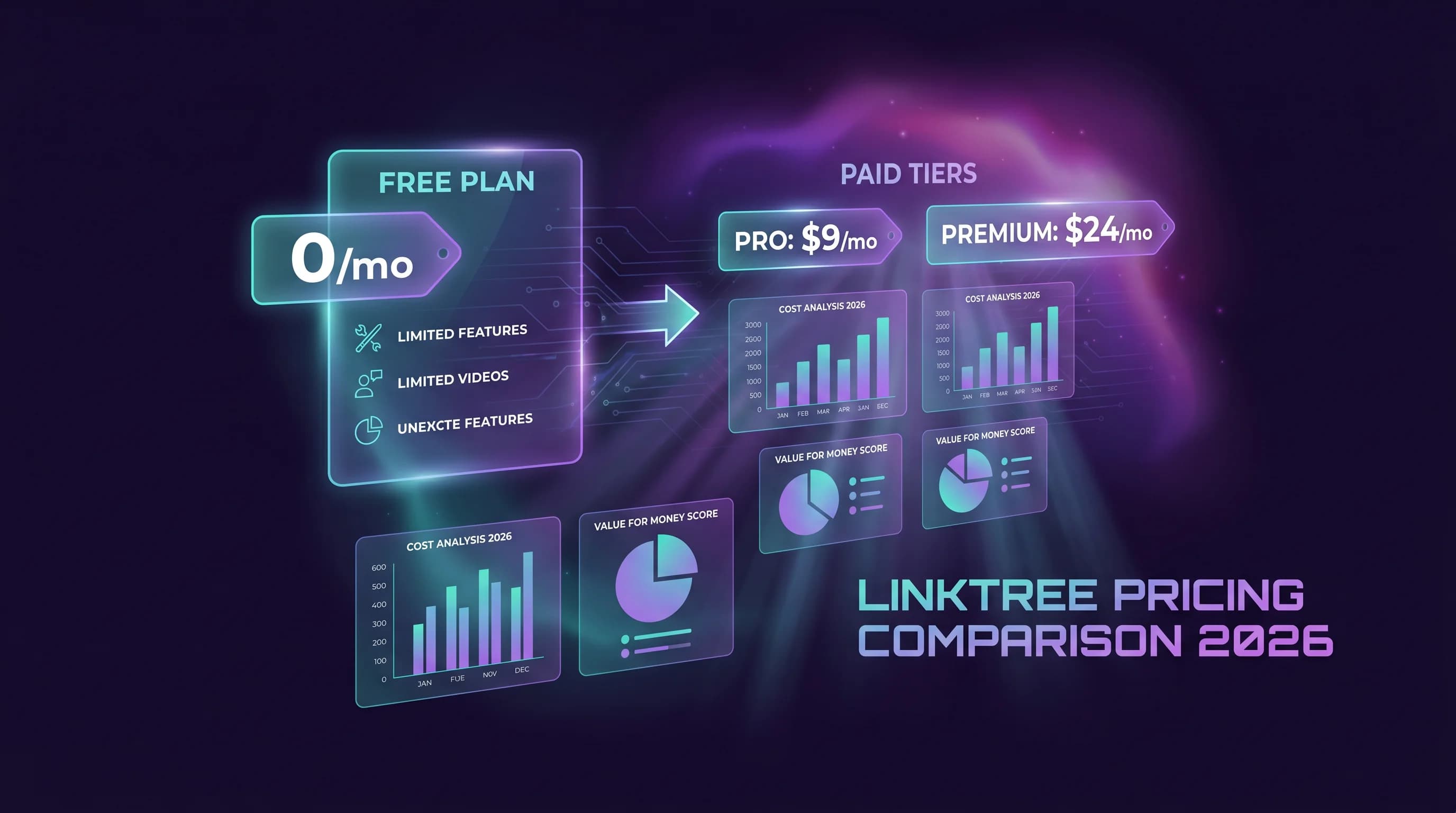
Linktree Pricing 2026 Explained + Cheaper Alternative
Every Linktree plan compared: free, $8, $15 and $35/mo, plus the 12% fee on digital product sales. See where a QR code does the same job for less.
Read More
Linktree vs Beacons vs Stan Store: Price & Fees (2026)
Linktree ($0-$35/mo), Beacons ($0-$90/mo) and Stan Store ($29-$99/mo): price, sales commissions (0-12%), analytics and QR codes - honest verdicts.
Read More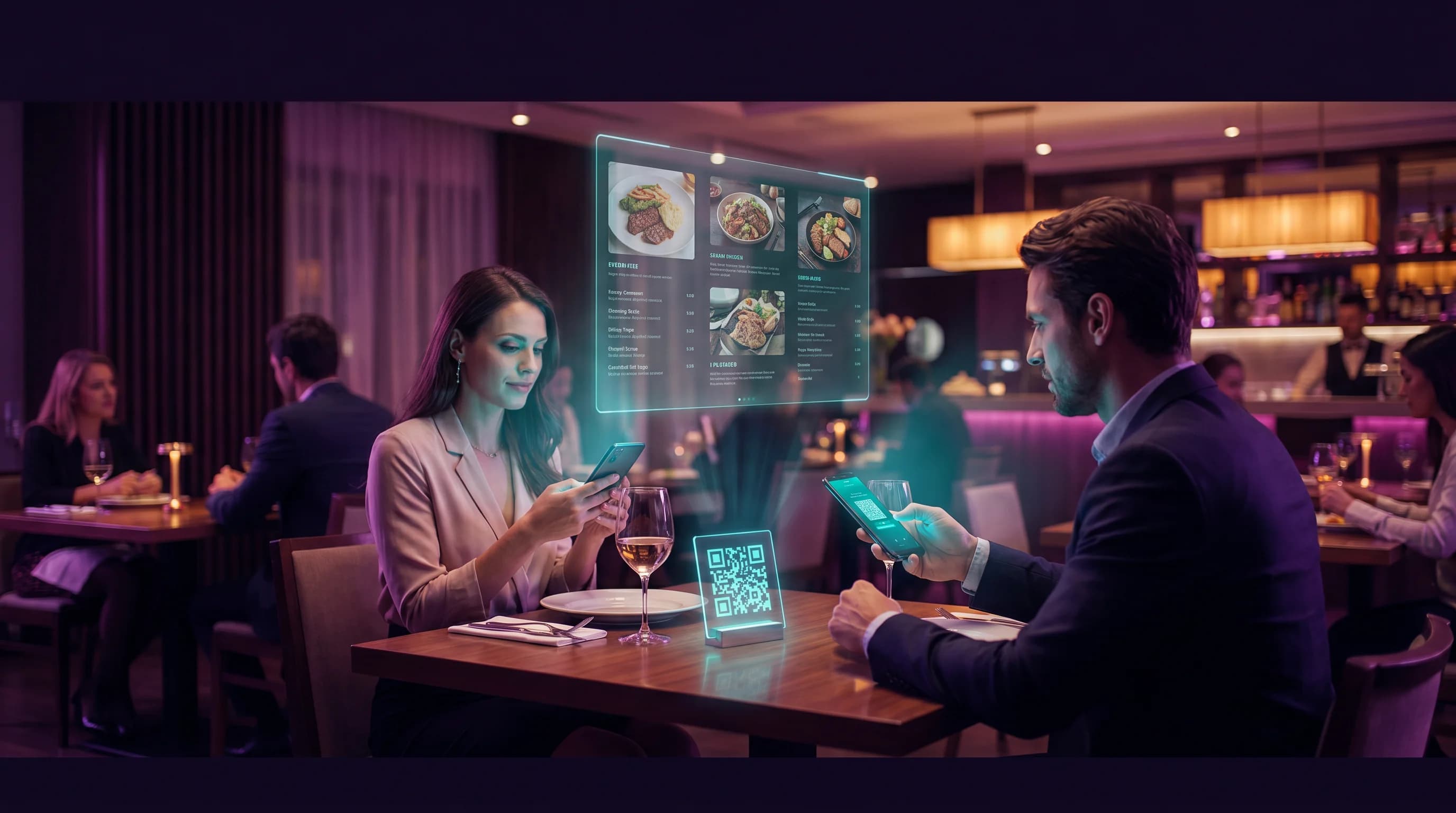
Linktree Alternative for Restaurants: QR Menus, Reviews and Booking in One Scan
Restaurants already use QR codes for menus. A multi-link QR code connects menus, reviews, reservations, and delivery in a single scan - no Linktree account needed.
Read More