You printed a QR code. Maybe on 5,000 business cards. Maybe on a billboard. Maybe on a product label that already shipped. And now you have realised the URL is wrong, the campaign moved, or the destination page is gone.
You cannot change a static QR code. You can change a dynamic QR code. That is the entire answer in one sentence, and the rest of this guide explains how to tell which one you printed - and what to do if you got unlucky and printed a static.
Key Takeaways
- Static QR codes encode the destination directly into the pattern. They cannot be edited - ever.
- Dynamic QR codes use a redirect link. You change the destination in your dashboard, the printed code keeps working.
- If you already printed a static code pointing to the wrong URL, your best fix is to redirect the URL itself (if you own it) or create a dynamic QR for future prints.
- On QR-Verse, the free plan includes 1 dynamic QR code with unlimited scans and 60 days of analytics. No credit card required.
- Test before you print. Always. A free dynamic code is cheaper than a reprint.
Want to try this yourself? The generator is free and opens straight away.
Create a QR codeThe Short Answer
If the QR code on your printed material is dynamic, you can change where it points in about 30 seconds. Open your QR code dashboard, edit the destination URL, save. Every future scan goes to the new URL. The printed pattern does not change. You do not reprint anything.
If the QR code is static, the destination URL is baked into the pattern itself. There is no dashboard, no redirect, no way to change it. The only fix is to reprint the material with a new code - or to redirect the destination URL through your DNS or web server if you own that domain.
The difference matters more than almost any other QR code decision. Let us break it down.
Static vs Dynamic - What Each One Actually Does
Both types look identical to the human eye. Same black-and-white squares. Same scan behaviour on your phone. The difference is what is encoded inside.
Static QR codes
A static QR code stores the destination directly. If your QR code links to https://example.com/menu, every character of that URL is encoded into the pixel pattern. When someone scans, their phone reads the pixels and sees the URL. No server. No redirect. No editing.
Pros: Works forever, even offline. Never depends on a third-party service. Cannot break unless the destination URL itself dies.
Cons: Cannot be edited. No analytics. No way to track scans. No way to A/B test. If you typo the URL, you reprint.
Dynamic QR codes
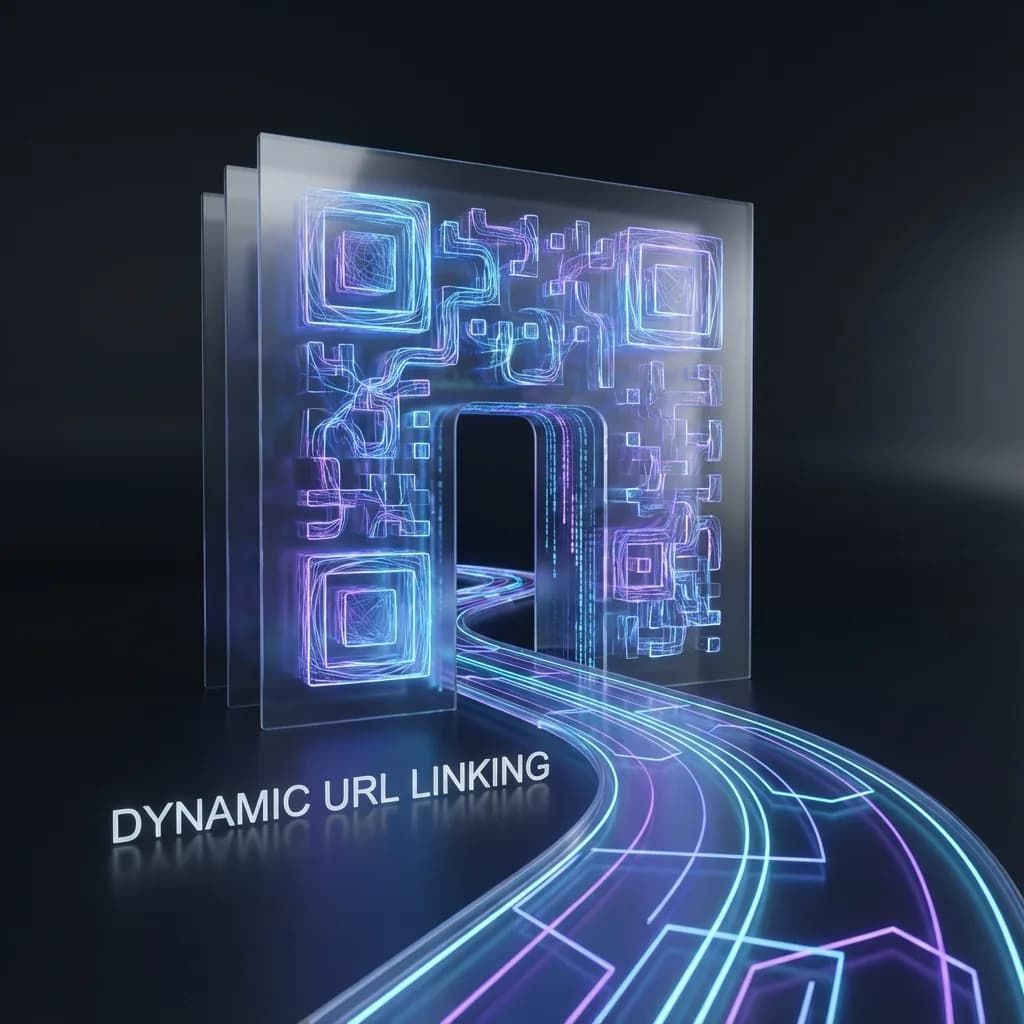
A dynamic QR code stores a short redirect URL. Something like qr-verse.com/r/abc123. When someone scans, their phone hits that short URL, our servers look up where you want them to go right now, and they get forwarded to your real destination.
The pattern is locked. The destination is not. Update the destination in your dashboard, and every future scan goes to the new URL. The printed code keeps working forever.
Pros: Editable destination. Full scan analytics - device type, location, time, referral. You can change your mind. You can A/B test. You can fix typos. You can move campaigns.
Cons: Depends on the platform being online. If your provider shuts down or kicks you off the free tier, your codes stop redirecting. Choose a provider you trust.
For the longer comparison, read our static vs dynamic QR codes deep dive. It covers the trade-offs in 7,000+ words.
How to Set Up a Dynamic QR Code on QR-Verse (Free Tier)
If you have not printed yet, or you are about to do a new run, switch to dynamic. The free plan covers it.
Create a free QR-Verse account
Go to qr-verse.com and sign up. No credit card. Email or Google.
Choose 'Dynamic URL' as the QR type
On the create page, pick the URL type and toggle 'Dynamic' on. You get 1 free dynamic code on the free plan. Unlimited scans. 60 days of scan analytics.
Paste your destination URL and customise the design
Drop in the URL. Pick a colour, add a logo if you want, choose a frame. The free plan covers full design customisation including logo upload.
Download as PNG and test before printing
Download. Scan with your phone. Confirm it goes where you expect. Test on iOS and Android if you can - both use native camera, but always sanity check.
When the destination changes, edit it in your dashboard
Open your dashboard, find the code, click Edit, paste the new URL, save. The printed pattern keeps working. Every scan from that point forward goes to the new URL.
That is the entire flow. Six minutes from signup to a printable dynamic code that you can edit forever.
Create a free dynamic QR code in 30 seconds
1 dynamic code, unlimited scans, 60-day analytics, no credit card. Editable for life.
Create Free QR Code →I Already Printed a Static Code With the Wrong URL. Now What?
This is the worst-case scenario, and it happens to almost everyone at some point. You have three viable options, ranked by how much work they take.
Option 1: Redirect the URL itself (if you own the domain)
If your static QR code points to a URL on a domain you control - for example yourbrand.com/old-campaign - you can set up a server-side redirect at that URL. Anyone who scans the code still gets sent to yourbrand.com/old-campaign, but your server immediately bounces them to wherever you actually want them to go.
This is a free fix if you have web access. Most CMS platforms (WordPress, Webflow, Shopify, Squarespace) have a redirect rules feature. Or your developer can add a 301 redirect in nginx, Apache, or whatever serves the page.
Catch: You need to own the domain. If the QR code points to a free third-party shortener or a competitor's domain, this option does not exist.
Option 2: Use a dynamic QR as a bridge (long-term fix)
If you cannot edit the destination URL directly, but you can update the page that lives there, replace the content on that page with a script or redirect that bounces visitors to your new destination. The printed QR code still scans, the user lands on the old URL, but the page content forwards them immediately.
For future prints, switch entirely to a dynamic QR code. The printed code becomes a long-lived bridge - the pattern never needs to change again, even as your destination URL evolves over the years.
Option 3: Reprint with a dynamic QR code
Sometimes there is no clever fix. If the destination URL is on a domain you do not own, or the print run is small enough that reprinting is cheaper than engineering a workaround, just reprint. This time use a dynamic code so you never have to do it again.
The math: 500 printed flyers at EUR 0.10 each is EUR 50. A QR-Verse dynamic code is free. Reprint, switch to dynamic, and the problem disappears for the lifetime of your business.
Diagnostic Checklist - Is My QR Code Dynamic or Static?
If you do not remember what you created, here is how to tell.
Test 1: Scan it and look at the URL your phone shows.
Open your phone's camera app, point it at the code, and wait for the URL preview to appear. Do not tap it - just look at the URL.
- If the URL is short and contains a path like
/r/,/q/,/qr/,/d/, or a random-looking string (e.g.,qr-verse.com/r/abc123,qrco.de/xyz,bitly.com/2abc), it is dynamic. - If the URL is your real destination (e.g.,
yourbrand.com/menu,yourbrand.com/about,linkedin.com/in/yourname), it is static.
Test 2: Check your QR code platform's dashboard.
If you created the code through a service like QR-Verse, QR TIGER, Bitly, or Uniqode, log in and look at your code list. Dynamic codes appear in your dashboard with edit buttons and scan stats. Static codes either do not appear at all or appear as one-time downloads with no editing options.
Test 3: Look at the original download.
Some platforms label the file. A file called qr-static-abc.png is static. A file called qr-dynamic-abc.png or one created from a dashboard "campaign" or "tracked code" is dynamic.
If you used a tool like QRCode Monkey or downloaded directly from a free static-only tool, you almost certainly have a static code with no edit path.
Why Most People Pick the Wrong Type
The default on most free QR code generators is static. They do not require a sign-up, you get a download in 5 seconds, and most people do not realise they have just printed something they can never edit.
The trade-off is intentional from the tool's side: static codes cost the provider nothing to host (because there is nothing to host - the data is in the code). Dynamic codes need a redirect server that runs forever. Free static-only tools work because they have nothing to maintain. The user pays the hidden cost when they reprint.
If you are doing anything beyond a quick personal use case - business cards, packaging, signage, marketing materials - default to dynamic. Even if you are sure of the destination today, future-you will thank current-you for the option to change it.
FAQs
The Bottom Line
You cannot change a static QR code after printing. You can change a dynamic one in 30 seconds, free, for the rest of your account's life. The choice you make at creation time determines whether your printed materials are editable for years - or fixed forever.
If you are printing something that costs money to produce, default to dynamic. The free QR-Verse plan covers 1 dynamic code with unlimited scans and 60-day analytics, which is enough for most small business use cases. If you have already printed a static code with the wrong URL, your best options are a server-side redirect (if you own the destination domain) or reprinting with a dynamic code so this is the last time you ever have to think about it.
Print with confidence - use a dynamic QR code
Free plan: 1 dynamic code, unlimited scans, 60-day analytics. Edit the destination anytime. No credit card.
Create Free Dynamic QR Code →Ready to create your QR code?
Free plan available. No signup required. Create professional QR codes in seconds.
Ready to try it yourself?
Create professional QR codes with tracking, custom colors, and AI-generated art.
Create your QR code in seconds
No signup, no credit card. 27 QR types with full customization. Upgrade to Pro (EUR 4.99/mo) for unlimited power.
Share this article
Related Articles
Static vs Dynamic QR Codes: Differences and Costs
The difference in one line: a static QR code is fixed forever, a dynamic one lets you edit the link after printing. Costs, tracking and a decision table.
Read MoreDo QR Codes Expire? Static vs Dynamic Explained
Do QR codes expire? Static codes last forever. Dynamic codes depend on the service. Learn when QR codes stop working and how to make yours last.
Read More
QR Code Not Working? 8 Fixes for Camera & Scan Issues
QR code won't scan? From camera focus and low contrast to expired links - 8 fixes that solve 95% of scan problems on iPhone and Android.
Read More