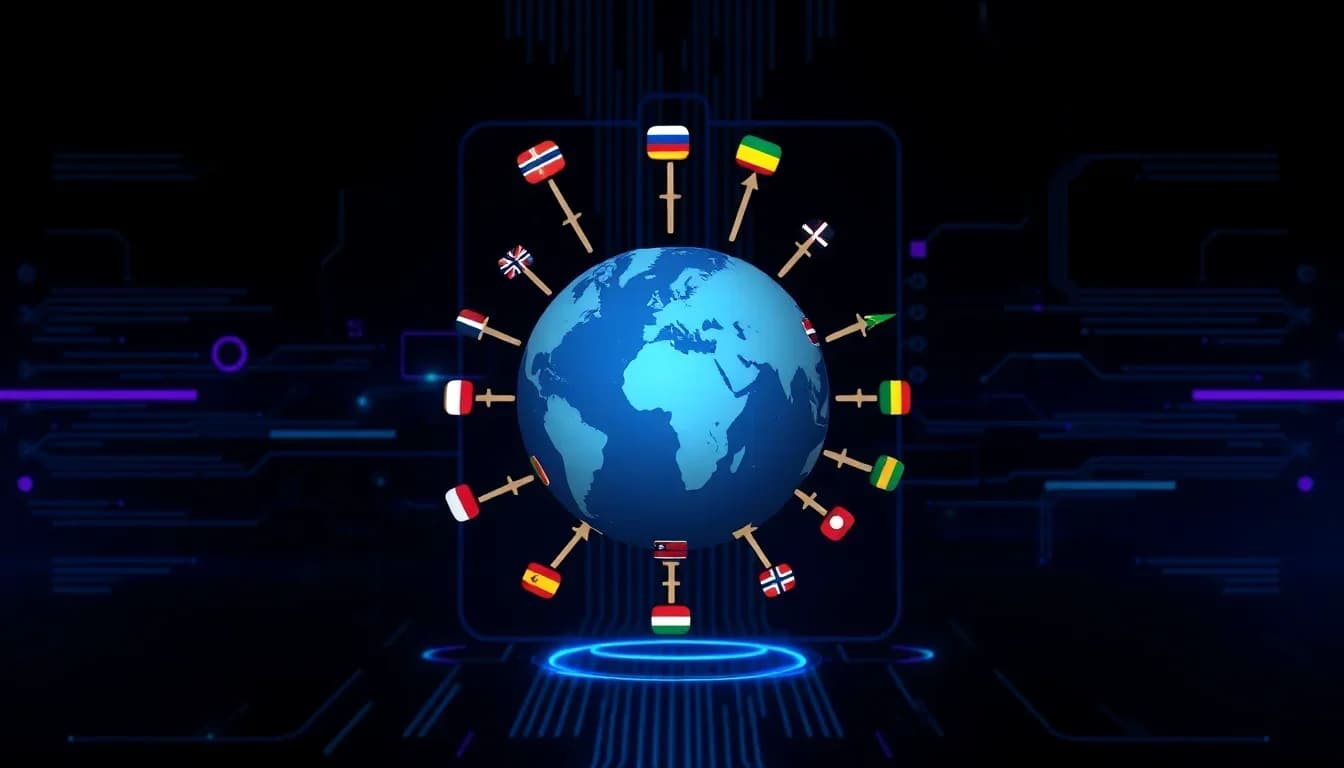
Your product ships to 12 countries. Your restaurant serves tourists from everywhere. Your event welcomes speakers from across the globe. One QR code, dozens of languages - that's the power of multi-language QR codes. Instead of printing separate codes for each market, a single dynamic QR code detects the scanner's language and delivers the right content automatically.
Want to try this yourself? The generator is free and opens straight away.
Create a QR codeWhat Are Multi-Language QR Codes?
A multi-language QR code is a dynamic QR code that detects the scanner's device language or geographic location and redirects them to the appropriate version of your content. One physical code, multiple destinations.
When someone with a Spanish-language phone scans your code, they see the Spanish page. A German user sees the German version. Everyone else gets English (or whichever fallback you choose). The experience feels native - no language dropdowns, no confusion.
Real-world example: A hotel in Amsterdam prints one QR code on the room info card. Dutch guests see check-out times in Dutch, German guests in German, and everyone else in English. One card, one code, seven languages.
Why Multi-Language QR Codes Matter
Going multilingual isn't just about translation - it's about trust, conversion, and user experience. Here's why it makes a difference:
- Higher conversion rates - People are 72% more likely to buy a product when the information is in their native language. A localized landing page removes friction instantly.
- One code for global packaging - Print a single QR code on product packaging that ships worldwide. No need for region-specific labels or sticker overlays.
- Better user experience - No one wants to land on a page they can not read. Auto-detection works silently - users do not even notice the redirect.
- Simplified print logistics - One version of your brochure, menu, or product label works everywhere. Less inventory, fewer SKUs, lower printing costs.
- SEO benefits for landing pages - Each language version of your destination page can be indexed by search engines, helping you rank in multiple markets simultaneously.
- Measurable by language - Track which languages generate the most scans. Understand where your audience is - and which markets to invest in next.
How Multi-Language QR Codes Work
The technology behind multi-language QR codes is straightforward. Here's the typical flow:
- User scans the QR code - Any smartphone camera reads the code. No special app needed - it's a standard QR code.
- Device sends language data - When the scan triggers a URL request, the user's browser sends their preferred language via the Accept-Language header. Some systems also use IP-based geolocation.
- Server-side redirect - The QR code points to a dynamic URL that reads the language preference and redirects to the correct localized page.
- User sees localized content - The whole process takes under a second. The user lands directly on content in their language - no selection screens, no delay.
QR-Verse: Built for Multiple Languages
QR-Verse isn't just available in multiple languages - it's built from the ground up as a multilingual platform. The entire interface, all documentation, and every feature works natively in 7 languages. Your QR code dashboard, scan analytics, and campaign management are all fully localized.
This matters because your team members in different countries can use the same platform in their own language. A marketing manager in Paris sees the French interface while the brand team in Sao Paulo works in Portuguese - all managing the same QR codes.
- 7 languages built in - English, Dutch, Spanish, French, German, Italian, and Portuguese - all included.
- Localized URL slugs - Every language has native URL paths. /create instead of /en/create.
- Language-specific analytics - See which languages and countries scan your QR codes most.
- Automatic language detection - Visitors are automatically directed to their preferred language.
Use Cases: Who Needs Multi-Language QR Codes?
International Product Packaging
Consumer goods, electronics, food products - any physical item that ships across borders. One QR code on the box links to localized setup guides, ingredient lists, warranty pages, or support portals. Saves printing costs and reduces compliance headaches.
Tourism and Hospitality
Hotels, museums, city guides, and tourist attractions serve visitors from dozens of countries daily. QR codes on room cards, exhibit labels, or info boards auto-redirect to the visitor's language. No more printing guides in 8 languages.
International Events and Conferences
Event badges, programs, and signage with QR codes that serve schedules, speaker bios, and venue maps in each attendee's language. Works perfectly for trade shows, summits, and multi-country corporate events.
Global Marketing Campaigns
Run one campaign across multiple markets. Print one set of flyers, posters, or business cards. The QR code handles the localization, sending each prospect to a landing page that speaks their language.
Education and E-Learning
Universities and online course platforms use multi-language QR codes in textbooks and course materials. Students scan and get content in their study language, whether that's English, Spanish, or Portuguese.
Healthcare and Pharmaceuticals
Patient information leaflets, medication guides, and hospital wayfinding all benefit from language-aware QR codes. Critical for patient safety in multilingual communities.
Analytics Across Languages
When you create QR codes with QR-Verse, you get detailed analytics for every scan - including geographic data that shows you exactly where your codes are being scanned. This is invaluable for understanding which language markets are engaging most.
Combine scan data with campaign tags to measure performance per language, per region, per campaign. Spot trends early: if your German scans are growing 40% month-over-month, that's a signal to invest more in the DACH market.
Key metrics to track:
- Scans by country and city
- Unique vs. repeat scanners
- Device and OS breakdown
Best Practices for Multi-Language QR Codes
- Always set a fallback language - Not every language can be covered. Set English (or your primary market language) as the default for unsupported locales.
- Test on real devices - Change your phone's language setting and scan the code. Verify each redirect works correctly before printing.
- Use dynamic QR codes - Static QR codes can't redirect based on language. Always use dynamic codes so you can update destinations without reprinting.
- Keep URLs short and clean - Multi-language redirect chains can get complex. Use clean URL structures like /en/guide, /de/guide, /fr/guide.
- Localize the landing page, not just translate - Translation isn't enough. Adapt examples, images, currencies, and cultural references for each market.
- Monitor analytics by language - Track which languages get the most scans. Use this data to prioritize which languages to add next and where to invest marketing budget.
Frequently Asked Questions
Can one QR code redirect to different languages?
Yes. A dynamic QR code can detect the scanner's device language and redirect to the appropriate localized page automatically. This is called a multi-language or multilingual QR code.
How does the QR code know which language to show?
When you scan a QR code and your browser requests the URL, it sends an Accept-Language header with your preferred language. The server reads this and redirects accordingly. Some systems also use IP-based geolocation as a fallback.
Is QR-Verse available in multiple languages?
Yes. QR-Verse fully supports 7 languages: English, Dutch, Spanish, French, German, Italian, and Portuguese. The entire platform - interface, documentation, and features - is localized in all seven.
Do I need a paid plan for multi-language QR codes?
QR-Verse is free to use. You can create dynamic QR codes, track scans, and manage campaigns in all 7 supported languages without paying anything.
Can I add more languages later?
With dynamic QR codes, you can update the destination URL anytime. As you add new language versions of your content, the same QR code can redirect to them - no reprinting needed.
What happens if someone scans from an unsupported language?
The QR code redirects to your fallback language (typically English). The user still reaches useful content - just not in their preferred language.
Can I track scans by language or country?
Yes. QR-Verse provides scan analytics including geographic location, device type, and time of scan. You can see which countries and regions generate the most scans.
Do multi-language QR codes work offline?
QR codes need an internet connection to redirect dynamically. The scan itself works offline (your camera reads the code), but the redirect to a language-specific page requires connectivity.
Ready to create your QR code?
Free plan available. No signup required. Create professional QR codes in seconds.
Ready to try it yourself?
Create professional QR codes with tracking, custom colors, and AI-generated art.
Try our free tools:
Create your QR code in seconds
No signup, no credit card. 27 QR types with full customization. Upgrade to Pro (EUR 4.99/mo) for unlimited power.
Share this article
Related Articles
Multi-URL QR Code: One Code, Multiple Links (Free)
How to create a QR code for multiple links. One scan opens all your URLs on a mobile page. Free step-by-step guide for business cards, events, marketing.
Read More
QR Codes in Healthcare: Improve Patient Experience
From patient registration to medication tracking - how healthcare providers use QR codes to streamline processes and improve care.
Read MoreQR Codes in Education: Teacher's Interactive Guide
Transform classrooms, libraries, and campuses with QR codes. Practical strategies for educators at every level.
Read More